
Table of Contents
A cold traffic campaign targets people who have never heard of your brand. Unlike retargeting warm audiences, cold traffic campaigns focus on building awareness and trust first, then guiding strangers down your funnel. The key to success in 2026 is an engagement-first approach—prioritizing signal-building metrics like video views and content interactions over immediate sales. Start with awareness or engagement objectives, test multiple creative variations, and use broad targeting with creative-to-audience matching. Launch with a testing budget of 10-20x your target CPA, run for at least 7 days, then optimize based on engagement rates and gradual cost improvements.
If you’ve been running ads for a while, you’ve probably heard this term thrown around: cold traffic campaign.
And honestly? It sounds intimidating.
Cold traffic. Cold audiences. Prospecting.
It feels like trying to start a conversation with a complete stranger at a party. You don’t know them. They don’t know you. And you’re supposed to somehow get them interested in what you’re selling.
But here’s the thing. Every single business started with cold traffic.
Even the biggest brands you know today—they all had to introduce themselves to people who had no clue who they were. That’s what a cold traffic campaign is. It’s your introduction. Your handshake. Your “hey, nice to meet you.”
Let me walk you through exactly how to build one that actually works.
What Exactly is a Cold Traffic Campaign?
Let’s start with the basics.
A cold traffic campaign is any advertising campaign aimed at people who have never interacted with your brand before. They’ve never visited your website. They’ve never seen your ads. They’ve never heard your name.
They’re complete strangers.
Think of it like this. Warm traffic is people who already know you. They’ve been to your site. They’ve watched your videos. They’ve engaged with your content.
Cold traffic? They’re walking past your store without even looking at the window.
Your job is to stop them in their tracks. Get their attention. And give them a reason to care.
The biggest mistake I see? People running cold traffic campaigns the exact same way they run retargeting campaigns. They try to sell immediately. They go straight for the jugular.
That doesn’t work.
Cold audiences don’t trust you yet. They don’t know if you’re legit. They don’t know if your product is any good. Why would they buy from a stranger?
That’s why your cold traffic campaign needs to be different. It needs to educate first. Entertain second. Sell third.
Why Cold Traffic Campaigns Fail
Let me tell you about a friend of mine.
He spent five thousand pesos on a cold traffic campaign. Direct sales objective. Sales-focused creative. “Buy now” call-to-action.
And you know what happened?
He got clicks. Lots of clicks.
But sales? Zero. Zilch. Nada.
He was so frustrated. “Why isn’t this working? The ads look great. The offer is good. What’s wrong?”
Here’s what was wrong. He was asking strangers to marry him on the first date.
Cold audiences don’t know you. They don’t trust you. And they definitely don’t want to buy from you on the first interaction.
Cold traffic campaigns fail for three reasons:
One. You’re using the wrong campaign objective. Sales or conversions campaigns work great for warm audiences. But for cold traffic? You’re wasting your budget.
Two. Your creative is too salesy. Nobody wants to be sold to by a stranger. They want to be educated. Entertained. Intrigued.
Three. You’re not giving the algorithm enough data to optimize. Cold traffic needs to build signals first. Conversions come later.
Sound familiar?
Don’t worry. I’ve made these mistakes too. And I’m about to show you exactly how to avoid them.
The Mindset Shift You Need
Before we get into tactics, let’s talk about mindset.
Because honestly? Most advertisers approach cold traffic completely wrong.
Cold traffic campaigns are not about immediate sales.
Let me say that again. Cold traffic campaigns are not about immediate sales.
I know that sounds crazy, especially if you’re running ads to make money. But hear me out.
A cold traffic campaign is about starting a relationship. It’s about introducing yourself. It’s about building awareness and trust.
Sales come later. After they know you. After they trust you. After they’ve seen you show up consistently.
Your cold traffic campaign is the first date. Not the proposal.
What’s the goal of a first date? To see if there’s chemistry. To learn about each other. To decide if you want a second date.
Same thing with cold traffic. Your goal is to get them to take a small step. Watch a video. Visit your site. Follow your page.
That’s it. That’s the win.
Because once they take that small step, they’re no longer cold. They’ve warmed up. And now you can retarget them with something more sales-focused.
Cold traffic warms them up. Retargeting closes the sale.
How to Structure Your Cold Traffic Campaign
Alright, let’s get into the actual setup.
Here’s the framework I use for every cold traffic campaign. It works for e-commerce, service-based businesses, and even B2B. For a complete breakdown of building audiences from scratch, check out our pillar guide on how to build high-converting audiences.
Step 1: Choose the Right Campaign Objective
This is where most people go wrong.
Do not use a Sales or Conversions objective for cold traffic.
I know it’s tempting. You want sales. You want ROI. But cold audiences aren’t ready to convert yet.
Instead, choose one of these objectives:
- Engagement
- Video Views
- Traffic (but only if you have a super compelling hook)
Here’s why. These objectives optimize for signals. Engagement gets you comments, shares, and reactions. Video views get you watch time. Traffic gets you website visits.
All of these are signals that tell Meta “this person is interested.”
And once Meta knows who’s interested, it can find more people like them.
Engagement-first approach is the secret to cold traffic success in 2026. As one expert puts it, cold audiences need Awareness and Engagement objectives—”you’re introducing yourself. Don’t ask for conversions yet.”
Step 2: Define Your Audience
Now, who should you target?
A lot of people overcomplicate this. They stack interest after interest. They layer demographic after demographic.
Here’s my rule: start broad.
Use interests that are loosely related to your product or service. If you sell fitness equipment, target people interested in fitness, health, and wellness. That’s it. Don’t stack three or four interests. Keep it simple.
Why broad?
Because broad audiences give Meta’s algorithm more room to find the right people. It uses the engagement signals you generate to figure out who your audience actually is. For detailed strategies, read our guide on broad targeting best practices for cold traffic.
Cold audience targeting should be wide, not narrow. Let the algorithm do the heavy lifting.
Meta’s Andromeda update has fundamentally changed how targeting works. Broad targeting now consistently outperforms tight targeting because Meta’s AI understands users better than manual targeting ever could. As MarTech notes, “broad targeting works because Meta’s algorithm is so good at identifying future customers that it often knows more about who is likely to buy than the advertiser does”.
If you’re running a service-based business, you’ll need a slightly different approach. Service purchases are high-consideration. Your prospect doesn’t decide in 5 seconds. They need trust, proof, and a relationship before they hand over money. That’s where audience layering for service-based Meta ads comes in—stacking job titles, interests, and behavioral signals to find high-quality leads.
Step 3: Create Attention-Grabbing Creative
This is where your budget lives or dies.
Cold audiences don’t know you. They have zero reason to care about your ad. If your creative doesn’t grab them in the first few seconds, they’re scrolling past.
You need a pattern interrupt.
Something that makes them stop. Something that makes them go “hmm, what’s this?”
That could be:
- A bold statement
- A surprising visual
- A question that hits a pain point
- A before-and-after transformation
- An unexpected angle
Don’t be boring. Boring doesn’t work for cold traffic.
And here’s the other thing. Educate, don’t sell.
Your cold traffic creative should teach them something. It should solve a small problem. It should give them value upfront.
When you educate, you build authority. You build trust. You position yourself as an expert.
Selling doesn’t work on cold audiences. Education does.
In 2026, creative has become the new targeting. As industry experts note, creative drives Meta ad performance more than targeting does. According to EMARKETER, “Brands that treat creative for these platforms as a targeting lever consistently outperform those that don’t”. Meta’s Andromeda update suggests around 70-80% of ad performance now depends on creatives, not targeting or hacks.
Step 4: Build a Simple Funnel
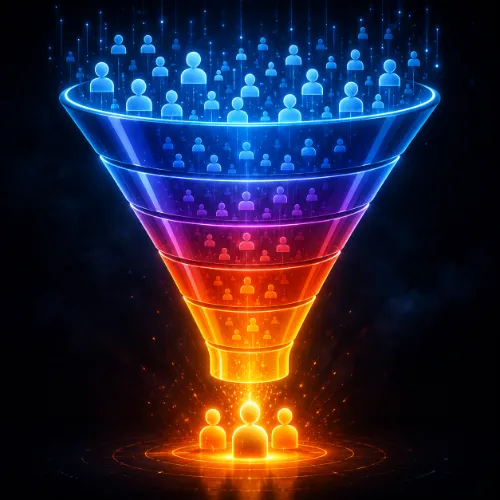
Your cold traffic campaign is just the top of your funnel. It’s the introduction.
After someone engages with your cold traffic ad, they move down the funnel.
Here’s a simple three-stage funnel:
Stage 1: Cold Traffic (Awareness)
- Objective: Engagement or Video Views
- Creative: Educational, entertaining, value-first
- Goal: Get attention and engagement
Stage 2: Warm Traffic (Consideration)
- Objective: Traffic or Engagement
- Audience: People who engaged with your cold traffic ads
- Creative: Deeper education, case studies, social proof
- Goal: Build trust and interest
Stage 3: Hot Traffic (Conversion)
- Objective: Sales or Conversions
- Audience: People who visited your site or spent time on your content
- Creative: Offers, urgency, testimonials
- Goal: Close the sale
See how it works? Each stage builds on the previous one.
Cold traffic warms them up. Then you close them later.
If you want to dive deeper into full-funnel audience structure, check out our guide on traffic and conversion—it covers how attention turns into action at every stage.
Modo25’s 2026 funnel framework follows a similar structure: a reach campaign at the top (around 20% of budget) building brand awareness with cold audiences, an engagement campaign in the middle (around 20%) warming up video viewers and website visitors, and a conversion campaign at the bottom (around 60%) retargeting high-intent audiences.
Step 5: Test and Optimize
Cold traffic campaigns need time. Don’t check your dashboard after two hours and panic.
Give it at least 7 days.
The learning phase on Meta takes time. Let the algorithm find its footing.
Watch these metrics:
- CPM (cost per thousand impressions) – Should be reasonable for your industry
- CTR (click-through rate) – Above 1% is good for cold traffic
- Engagement rate – Comments, shares, reactions
- Video view rate – Especially for video creative
As your campaign runs, you’ll start to see patterns. Some creatives will perform better. Some audiences will respond better.
Pause the underperformers. Double down on the winners.
Cold Traffic Strategies That Actually Work in 2026
Alright, let me give you some specific strategies that are working right now.
Strategy 1: The Content Ad
This is my favorite cold traffic strategy.
Create a piece of genuinely helpful content. A blog post. A video tutorial. A guide. Anything that solves a problem for your target audience.
Then run ads to that content.
Why does this work? Because you’re not asking for anything. You’re giving. You’re providing value upfront.
When someone consumes your content and finds it helpful, they automatically start trusting you. They see you as an authority. They’re much more likely to buy from you later.
The content itself becomes your lead magnet. It’s the first step in building a relationship.
Strategy 2: The Hook and Educate Ad
This is for video ads.
Start with a hook. Something that grabs attention immediately. A question. A bold statement. A surprising fact.
Then educate. Teach them something useful related to your product or service.
Don’t mention your product until the very end. And even then, make it soft. A gentle call-to-action like “learn more” or “visit our site.”
The goal is engagement and education. Not immediate sales.
When building video for cold audiences, remember that a significant number of consumers watch with sound off. As EMARKETER notes, “creating impactful visuals that get the message across without sound can grab consumers’ attention”. Build your video for silence, not sound.
Strategy 3: The Value-First Lead Magnet
This is a classic for service-based businesses.
Create a lead magnet—a checklist, a template, a consultation, a guide—and run cold traffic ads to a landing page where people can download it.
Again, you’re giving value first. You’re not asking for money. You’re asking for an email address.
Once they’re on your list, you can nurture them with email marketing. Educate them further. Build trust. Then eventually, offer your service.
This works because it builds trust before selling.
How Much Should You Budget for Cold Traffic?
This is a common question.
For a cold traffic campaign, you need enough budget to get meaningful data. At minimum, that’s 10x to 20x your target CPA.
Let me give you an example.
If your product costs ₱1,000 and you want a CPA of ₱500, you need at least ₱5,000 to ₱10,000 to test a cold traffic campaign.
Why so much? Because cold traffic needs time to optimize. The algorithm needs to learn who to show your ads to. That takes data. And data costs money.
Start small. Test. Scale the winners. And don’t get discouraged if your early results aren’t amazing.
Cold traffic is a long game.
For budget allocation, industry experts recommend starting at 70% prospecting, 20% retargeting, and 10% retention, adjusting as your audience pools grow. The 70/20/10 framework is the most practical starting structure for Meta ads strategy.
Measuring Cold Traffic Success
Here’s something important.
Don’t measure cold traffic campaigns on ROAS or CPA alone.
That’s like judging a first date by whether you got married at the end. It’s the wrong metric.
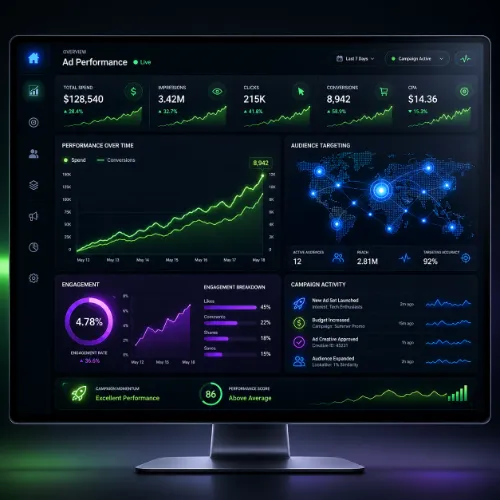
Measure cold traffic campaigns on signals.
- Engagement rate
- Video view rate
- CTR
- Cost per engagement
- Landing page view rate
These metrics tell you if you’re building awareness and trust. Sales come later.
If your engagement rates are good, your campaign is working. Even if you haven’t made any sales yet.
The sales will come. But first, you need signals.
Cold Traffic vs Retargeting: How They Work Together
Think of cold traffic and retargeting as the two sides of the same coin.
Cold traffic brings new people into your ecosystem.
Retargeting closes the sale.
You can’t have one without the other. If you only run retargeting, you’ll run out of people to target eventually. If you only run cold traffic, you’ll never convert anyone.
You need both.
Here’s how they work together:
- Cold traffic campaign introduces your brand to new people
- They watch a video, click a link, or engage with your content
- They’re now warm
- Retargeting campaign reminds them about your brand
- They eventually buy
Simple, right?
Most beginners focus all their energy on one or the other. Don’t do that. Build a full-funnel strategy that includes both.
Common Cold Traffic Mistakes to Avoid
Let me save you some pain.
Mistake 1: Using Sales Objective for Cold Traffic
I’ve said this before, but it’s worth repeating.
Don’t use a Sales or Conversions objective for cold traffic.
You’re asking strangers to buy from you. It doesn’t work.
Mistake 2: Targeting Too Narrow
Stacking too many interests shrinks your audience too much. The algorithm has less room to find the right people.
Start broad. Let the data guide you.
Mistake 3: Running Boring Creative
Cold audiences don’t know you. If your creative is boring, they’ll scroll past.
Be interesting. Be surprising. Be different.
Mistake 4: Giving Up Too Early
Cold traffic needs time. Give it at least 7 days before you make any decisions.
Be patient. Trust the process.
Mistake 5: Forgetting the Funnel
Cold traffic is just the beginning. If you don’t have a retargeting campaign in place, you’re leaving money on the table.
Build a full funnel. Don’t just focus on one stage.
Advanced Cold Traffic Tactics for 2026
Once you’ve got the basics down, here are some advanced moves that separate amateurs from pros.
Exclude Low-Intent Engagers
Not everyone who engages with your cold traffic is worth retargeting.
Someone who watched 3 seconds of your video? They barely noticed you. Someone who double-tapped your post without thinking? They’re not interested.
You need to exclude these people from your retargeting.
Why? Because if you throw them into the same retargeting audience as your high-intent engagers, the algorithm will show ads to the cheapest people first. Those low-intent users will eat up your budget. And your real buyers? They won’t even see your ads.
Learn how to exclude low-intent engagers from retargeting to protect your budget and focus on people who actually might buy.
Use Lookalike Audiences from High-Value Customers
Once you have enough data—enough conversions, enough high-value customers—you can build lookalike audiences.
These are people who look like your best customers. Same behaviors, same interests, same demographics. Meta finds them for you.
But here’s the catch. The quality of your lookalike depends entirely on the quality of your source audience. If you feed Meta a list of your highest-value customers, you’ll get a lookalike that actually performs. If you feed it junk, you’ll get junk back.
Meta recommends using a source audience of 1,000–5,000 users, but you can still see strong results from smaller, highly qualified lists—like your top 500 buyers. The best sources are existing customers (especially high-value or repeat customers) and high-intent website visitors like cart abandoners or demo requests. Many advertisers test multiple tiers in parallel—starting with a 1% lookalike for the closest match, then expanding to 5% or 10% for broader reach.
This guide on the best source for lookalike high-value customers Meta will show you exactly where to pull your source audience from.
Exclude Overlapping Audiences
If you’re running multiple ad sets—one for cold traffic, one for warm, one for retargeting—and you’re not using exclusions, you’re setting money on fire.
Here’s why. Meta’s auction doesn’t know that your ad sets are supposed to serve different people. If two ad sets are eligible for the same user, they bid against each other. You drive up your own costs. The learning phase gets confused. And your ROAS drops.
The fix is simple: exclusions.
An audience exclusion strategy for multiple ad sets ensures every ad set has its own clean audience. No overlap. No internal competition. Just efficient spend.
Tracking and Data: The Foundation of Everything
None of this works if you’re not tracking properly.
You can’t optimize what you can’t measure.
If you’re running ads and you’re not sure which campaigns are driving sales, which audiences are converting, or which creatives are working… you’re flying blind.
One of the most important things you can do is match your Facebook pixel data with your CRM leads. This way, you know exactly which ads are bringing in actual customers, not just clicks and likes.
Here’s the reality for 2026: traditional pixel tracking is losing data fast. iOS blocks roughly 40% of tracking, browser restrictions are increasing, and cookie blocking is becoming widespread. If you’re running Facebook ads without the Conversions API in 2026, you’re fighting with one hand tied behind your back.
The solution is a hybrid approach: run dual-track Pixel plus Conversions API (CAPI) to gain 50% or more data accuracy, supporting 2026 privacy changes and strong Event Match Quality scores. CAPI sends data server-to-server, bypassing browser restrictions entirely, and can achieve 95%+ tracking accuracy.
Meta’s free one-click Conversions API is now available—no developer needed.
Here’s a practical guide on how to match Facebook pixel data with CRM leads. It’s a game-changer for anyone serious about tracking ROI.
And if you’re planning to scale internationally, you need to understand the data breakdown method for international scaling. Different countries, different behaviors, different results. Break down your data properly so you know where to double down and where to cut.
The Bigger Picture
Here’s what I want you to take away from all of this.
Cold traffic campaigns are about starting relationships, not closing sales.
You’re introducing yourself to strangers. You’re building awareness. You’re building trust.
Sales come later. After they know you. After they trust you. After they’ve seen you show up consistently.
Most people give up on cold traffic too quickly. They don’t see immediate sales and they panic.
Don’t be most people.
Trust the process. Build the funnel. And remember—every sale starts with a stranger.
Frequently Asked Questions
1. What exactly is a cold traffic campaign?
A cold traffic campaign targets people who have never interacted with your brand before. They’ve never visited your website, never seen your ads, and never heard your name. They’re complete strangers. Unlike retargeting campaigns that target warm audiences who already know you, cold traffic campaigns focus on building awareness, trust, and engagement first. The goal is to introduce your brand and start a relationship—not make an immediate sale.
2. Why do my cold traffic campaigns keep failing?
Most cold traffic campaigns fail for three reasons. First, you’re using the wrong campaign objective—Sales or Conversions objectives don’t work for cold audiences because they’re not ready to buy yet. Second, your creative is too salesy. Nobody wants to be sold to by a stranger. Third, you’re not giving the algorithm enough time or data to optimize. Cold traffic needs to build signals first. Conversions come later.
3. What campaign objective should I use for cold traffic?
Do not use Sales or Conversions objectives for cold traffic. Instead, choose Engagement, Video Views, or Traffic (but only if you have a super compelling hook). These objectives optimize for signals—comments, shares, reactions, watch time, and website visits. These signals tell Meta “this person is interested,” which helps the algorithm find more people like them. Engagement-first approach is the secret to cold traffic success in 2026.
4. How much budget do I need for a cold traffic campaign?
At minimum, you need 10x to 20x your target CPA to get meaningful data. For example, if your product costs ₱1,000 and you want a CPA of ₱500, you need at least ₱5,000 to ₱10,000 to test a cold traffic campaign. Cold traffic needs time to optimize and the algorithm needs data to learn who to show your ads to. Start small, test, scale the winners, and don’t get discouraged if early results aren’t amazing.
5. How long should I run a cold traffic campaign before optimizing?
Give it at least 7 days. The learning phase on Meta takes time. Don’t check your dashboard after two hours and panic. Let the algorithm find its footing. Watch metrics like CPM, CTR, engagement rate, and video view rate. As your campaign runs, patterns will emerge. Some creatives will perform better. Some audiences will respond better. Pause the underperformers and double down on the winners.
6. Should I use broad or narrow targeting for cold traffic?
Start broad. Broad audiences give Meta’s algorithm more room to find the right people. It uses the engagement signals you generate to figure out who your audience actually is. Meta’s Andromeda update has fundamentally changed how targeting works—broad targeting now consistently outperforms tight targeting because Meta’s AI understands users better than manual targeting ever could. Cold audience targeting should be wide, not narrow.
7. What kind of creative works best for cold audiences?
Cold audiences don’t know you, so you need a pattern interrupt—something that makes them stop scrolling. That could be a bold statement, a surprising visual, a question that hits a pain point, or an unexpected angle. More importantly, educate, don’t sell. Your cold traffic creative should teach them something, solve a small problem, or give them value upfront. When you educate, you build authority and trust. Selling doesn’t work on cold audiences. Education does.
8. What’s the difference between cold traffic and retargeting?
Cold traffic brings new people into your ecosystem. Retargeting closes the sale. You can’t have one without the other. If you only run retargeting, you’ll run out of people to target eventually. If you only run cold traffic, you’ll never convert anyone. Cold traffic introduces your brand to strangers, they engage with your content, they become warm, and then retargeting reminds them about your brand until they eventually buy.
9. How do I measure success for a cold traffic campaign?
Don’t measure cold traffic campaigns on ROAS or CPA alone. That’s like judging a first date by whether you got married at the end. Measure cold traffic campaigns on signals—engagement rate, video view rate, CTR, cost per engagement, and landing page view rate. These metrics tell you if you’re building awareness and trust. Sales come later. If your engagement rates are good, your campaign is working even if you haven’t made any sales yet.
10. What is the 70/20/10 budget rule for cold traffic?
The 70/20/10 framework is a practical starting structure for Meta ads strategy. Allocate 70% of your budget to prospecting (cold traffic), 20% to retargeting, and 10% to retention. Prospecting needs the largest share because you need enough volume to generate engaged users who can feed your retargeting pool. Shifting budget from prospecting to retargeting in the short term feels sensible but will starve your entire funnel.
11. Why should I exclude low-intent engagers from retargeting?
Not everyone who engages with your cold traffic is worth retargeting. Someone who watched 3 seconds of your video barely noticed you. Someone who double-tapped your post without thinking isn’t interested. If you throw them into the same retargeting audience as your high-intent engagers, the algorithm will show ads to the cheapest people first. Those low-intent users will eat up your budget. Excluding them protects your budget and focuses on people who actually might buy.
12. How do lookalike audiences work for cold traffic?
Once you have enough data—enough conversions, enough high-value customers—you can build lookalike audiences. These are people who look like your best customers with the same behaviors, interests, and demographics. Meta finds them for you. The quality of your lookalike depends entirely on the quality of your source audience. Feed Meta a list of your highest-value customers, and you’ll get a lookalike that actually performs. Feed it junk, and you’ll get junk back.
13. What’s the deal with Conversions API in 2026?
Traditional pixel tracking is losing data fast. iOS blocks roughly 40% of tracking, browser restrictions are increasing, and cookie blocking is becoming widespread. The solution is a hybrid approach: run dual-track Pixel plus Conversions API (CAPI) to gain 50% or more data accuracy. CAPI sends data server-to-server, bypassing browser restrictions entirely, and can achieve 95%+ tracking accuracy. Meta’s free one-click Conversions API is now available—no developer needed.
14. What are the most common cold traffic mistakes to avoid?
The biggest mistakes are using Sales objective for cold traffic (you’re asking strangers to buy), targeting too narrow (the algorithm has less room to find the right people), running boring creative (cold audiences scroll past), giving up too early (cold traffic needs at least 7 days), and forgetting the funnel (cold traffic is just the beginning—you need retargeting too). Don’t make these mistakes and you’ll be ahead of most advertisers.
15. How do I scale a cold traffic campaign that’s working?
Once you’ve identified winning creatives and audiences, double down on what’s working. Increase budget gradually—no more than 20% every 2-3 days to avoid resetting the learning phase. Test additional creative variations to prevent ad fatigue. Expand to lookalike audiences from your best customers. And most importantly, keep prospecting. Cold traffic is the lifeblood of your funnel. Never stop introducing yourself to new people.
Key Takeaways
Question: What is a cold traffic campaign?
A cold traffic campaign is an advertising strategy that targets people who have never interacted with your brand before. Unlike retargeting campaigns that target warm audiences, cold traffic campaigns focus on building awareness, trust, and engagement first. The goal is to introduce your brand to strangers and move them down your funnel toward eventual conversion.
Key Takeaways:
- Cold traffic campaigns are about awareness and trust-building, not immediate sales.
- Choose Engagement or Video Views objectives—not Sales or Conversions—for cold traffic.
- Start with broad targeting and let the algorithm find the right people.
- Create educational, value-first creative that grabs attention and builds authority.
- Build a full funnel: cold traffic introduces, retargeting converts.
- Budget at least 10-20x your target CPA to allow for testing and optimization.
- Measure signals like engagement rate and CTR, not just ROAS or CPA.
- Give your campaign at least 7 days before making optimization decisions.
- Exclude low-intent engagers to protect your retargeting budget.
- Use lookalike audiences from your highest-value customers for better results.
Final Thoughts
Look, I get it. Cold traffic campaigns can feel overwhelming.
You’re spending money on people who don’t know you. You’re not seeing immediate sales. It’s easy to wonder if it’s even working.
But here’s the thing. Every business needs cold traffic to grow.
You can’t rely on warm audiences forever. You need to constantly bring new people into your ecosystem. That’s what cold traffic does.
Start small. Test different creatives. Let the data guide you.
And remember—the goal isn’t to make a sale on the first interaction. The goal is to start a relationship.
Do that well, and the sales will follow.
Now go out there and introduce yourself to some strangers.