
Table of Contents
I won’t lie—when the message came in, I had to read it twice.
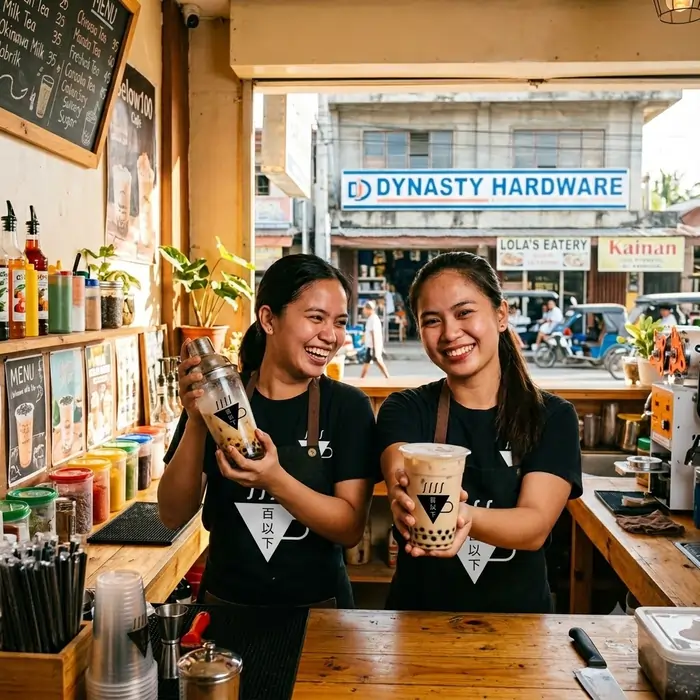
After weeks of sending out proposals and hoping someone would give us a shot, we finally landed a yes. Not from a big e‑commerce brand. Not from a tech startup. But from a tiny milk tea shop in Monkayo, Davao de Oro that had only been open for three weeks. The owners? Three cousins who grew up mixing powdered drinks in their lola’s kitchen, dreaming about one day having their own place. Now they had it. The problem? Nobody knew they existed.
Their shop sits near the high school and a few small offices. Hundreds of students and employees walk past every single day. But most don’t even glance inside. Why would they? When someone pulls out their phone and searches “milk tea near me Monkayo,” other shops pop up. Shops with reviews. Shops with photos. Shops that have been around longer. Below100 Cafe wasn’t just invisible—they weren’t even on the map yet.
“We’re invisible,” one of the cousins told me. “Three weeks in, walang pumapasok. The students don’t know we’re here. The employees don’t either. Dumadaan lang sila.”
Then she said the thing that hit me hardest: “Wala kaming website. Facebook page lang.”
That was it. That was the moment. This wasn’t going to be some fancy corporate SEO project. This was going to be the kind of work that actually matters—taking a brand‑new business with zero customers, no website, and nothing but a dream between two cousins, and making sure Google knew they existed. I knew right then that a smart local SEO strategy for a cafe could flip their story completely. It could turn that quiet little shop into the first name people see when they search for the best milk tea in Monkayo .
We’re still in the early stages. But I want to bring you along for the whole ride—from the SEO client pitch that finally got us a yes, to the daily grind that will (hopefully) fill those tables with students laughing over boba and office workers grabbing their afternoon sugar fix. If you’ve ever wondered how to land your first SEO client—especially a family‑run business with no track record—and then actually deliver results without a website, this is for you.
Overview:
- Client: Below100 Cafe, a brand‑new milk tea shop in Monkayo, Davao de Oro. Three weeks old. No regular customers yet.
- Owners: Two cousins who started the business together.
- Location: Tucked near a high school and several small offices. Their crowd? Students, teachers, employees, and locals.
- Online Presence: No website. Just a Facebook page and an unclaimed Google Maps listing .
- Goal: Rank #1 for “best milk tea in Monkayo” and other related searches.
- How We Pitched It: I showed the cousins the gap—live on my phone. I searched what their future customers were already searching, showed them the competitors who were getting all the love, and explained how a well‑optimized Facebook page and Google Business Profile could fill their shop without spending a peso on a website.
- The Plan: Hyperlocal keyword research covering both school and office searches. Facebook page optimization. GBP domination. Local citations. Review generation starting from customer number one. And content marketing right on Facebook and in community groups.
- What We Expect: From invisible to the top of Google Maps and organic results. Students walking in after class. Employees ordering delivery during their 3 PM slump. And two cousins finally seeing their dream come alive.
How We Landed the Client
I sat down with the cousins over a glass of their Okinawa milk tea—extra sinkers, less sugar. You could feel the nerves coming off them. The drinks were good. Honestly, really good. The kind you’d happily walk ten minutes under the sun for. But they weren’t worried about the product. They were worried nobody would ever taste it.
Their questions were simple and real: “How much does it cost to do SEO for a small cafe?” and “Will students and workers really find us just because of some changes on Facebook? Wala pa kaming suki, kahit isa.”
I didn’t throw jargon at them. I pulled out my phone, searched “milk tea near Monkayo high school,” and showed them the results. Competitors. Shops with reviews. Places students already recognized. Then I searched “milk tea near offices Monkayo” and “afternoon milk tea delivery Monkayo.” Same story. Below100 Cafe wasn’t just losing—they weren’t even playing the game yet. Their Google Maps listing hadn’t even been claimed.
Then I painted the picture. “Imagine three months from now. A student finishes exams and pulls out their phone. They type ‘milk tea after class.’ Or an office worker hits their 3 PM wall and searches ‘milk tea delivery near me.’ And your shop—your little shop near the school—is the first thing they see. They walk in. They order. They bring friends next time. And it happens again and again. All because we made sure Google knows you exist and that people who try your drinks love them. No website needed.”
I watched their eyes shift. They went from worried cousins to hopeful business owners in about three seconds. That was the yes. Our first SEO client case study was officially alive.
If you’ve ever wondered how to land your first SEO client—especially one with no proof yet—the secret isn’t a fancy deck. It’s empathy. It’s showing them the gap between where they are and where they could be, then offering a clear, believable path forward.
Why “Best Milk Tea in Monkayo” Actually Matters
Here’s the thing most people miss about local SEO. When someone types “best milk tea in Monkayo” into Google, they’re not browsing. They’re not killing time. They’re holding their phone, probably craving something cold, and they’re ready to buy within minutes. Same goes for “milk tea near the high school” or “milk tea delivery for office workers Monkayo.” Every single one of those searches is a person with money in their pocket and a decision to make.
For a shop that’s three weeks old with no regulars, every search is oxygen. If Below100 Cafe doesn’t show up, those customers walk right past them to a competitor. In a small town, word‑of‑mouth can take months. But Google? Google is the new neighbor recommendation. Especially near a school and a business district, where students and employees are constantly checking their phones.
Some people will tell you that without a website and a customer base, ranking is impossible. I don’t buy that. Google cares about three things: relevance, distance, and prominence. A fully optimized Facebook page and a rock‑solid Google Business Profile can nail all three. Our job is simple: make sure that when the craving hits—whether it’s during lunch break, after the last bell, or in the middle of a long work afternoon—Below100 Cafe is the obvious answer. Whether someone finds them through our review of the best milk tea in Monkayo , their Facebook page , or their Google Maps listing , we want them everywhere.
The Strategy We’re Using to Get Them to #1
This isn’t theory. It’s the exact step‑by‑step plan we’re running right now for a shop with no website, no customers, and two cousins holding on to a dream. If you’re an SEO freelancer or a cafe owner with nothing but a Facebook page, steal every single one of these moves.
Step 1: Keyword Research That Actually Listens to People
Most people guess at keywords. We didn’t. We mapped out exactly how real people in Monkayo search for milk tea. The big one was obvious: “best milk tea in Monkayo.” But we went deeper. “Monkayo milk tea shop.” “Milk tea flavors Monkayo.” “Cheap milk tea in Monkayo.” “Wintermelon milk tea Davao de Oro.”
Then we thought about the location. The cafe sits near a high school and several small offices. So we split our keywords into two buckets.
For students: “milk tea near Monkayo high school,” “student budget milk tea Monkayo,” “after school milk tea spot,” “affordable drinks near campus.”
For employees: “milk tea near offices Monkayo,” “afternoon milk tea delivery Monkayo,” “office break milk tea,” “milk tea for working people Monkayo.”
We also added “best‑selling milk tea Below100 Cafe” and “milk tea delivery Monkayo” because both crowds love ordering via Messenger.
Here’s why this works. Google doesn’t look at just one keyword. It looks at the whole cluster. If your Facebook page and Google Business Profile naturally talk about Okinawa, brown sugar, wintermelon, the high school, nearby offices, and affordable prices for students and workers, Google starts to trust you. You become the real deal—a genuine local business, not a generic page.
We used free tools like Google autocomplete and “People Also Ask” to find questions like “Which milk tea flavor is most popular in Monkayo?” and “Where to order milk tea during office break Monkayo.” Those questions became our content fuel. So ask yourself: What keywords should a milk tea shop target? The answer is never just one phrase. It’s the whole web of words your future customers are already typing.
Step 2: Facebook Page Optimization—Their Digital Storefront
Below100 Cafe’s Facebook page had one thing going for it from the start. Their description read:
🧋 Below100 — Home of the best milk tea in Monkayo! Refreshing drinks, affordable prices, and your favorite flavors. Available for dine‑in and milk tea delivery in Monkayo. 🤎
When I saw that, I smiled. The cousins had already baked in some of their best keywords without even knowing it: “best milk tea in Monkayo,” “affordable prices,” “milk tea delivery in Monkayo.” We didn’t need to rewrite it. We just needed to build on it. We added “Monkayo, Davao de Oro” to the longer About section and worked in their proximity to both the high school and nearby offices. Something like “Just a short walk from the high school and local offices—perfect for students, teachers, and employees looking for budget‑friendly drinks.” The personality stayed. The location and audience signals got stronger.
Then we pinned a menu post at the top of the page. Every drink listed with keywords woven in: “authentic milk tea shop PH,” “student budget boba,” “office break milk tea.” We renamed all the photo albums: “Below100 Cafe – Monkayo Milk Tea Flavors,” “Our School‑Area Shop,” “Office Workers’ Favorite Milk Tea.” Even if the first customers were just a handful of friends, those photos started building social proof.
We fixed the page username, set the categories to “Cafe” and “Beverage Shop,” double‑checked the phone number, Messenger, and address. We turned on the Services tab: “Milk Tea Delivery Monkayo (Near High School & Offices),” “Pickup Orders After Class,” “Office Group Orders,” “Student Group Bundles.” Every section became a signboard facing Google. If you’ve ever wondered how to optimize a Facebook page for local SEO, this is it: treat every field like it matters, because to Google, it does.
Step 3: Google Business Profile—The Real Ranking Machine
I told the cousins straight up: “Your Google Business Profile right now is more important than any website, any flyer, anything.” When someone searches “cafe near Monkayo high school” or “milk tea delivery for offices Monkayo,” Google shows the map pack first. Three businesses. Photos. Reviews. A big “Directions” button. If your profile is incomplete, you don’t exist.
We claimed their profile, verified it, and filled every single field. Category: Milk Tea Shop. Services: Dine‑in, Takeout, Delivery. Hours: including after‑school times and that 2–5 PM office break window. Description: naturally worked in “best milk tea in Monkayo,” “near the high school,” and “close to local offices.” We made sure their Google Maps listing was fully optimized.
Then the photos. Shop interior with the school in the background. Drinks being made. Boba pearls up close. And the cousins, smiling behind the counter. We started posting weekly updates: “Welcome Back to School,” “Good Luck on Exams,” “Mid‑Afternoon Office Break? We Deliver.” An active profile ranks higher. Period.
We also added Q&A items for both audiences: “What is the best milk tea in Monkayo near the high school?” and “Where can I order milk tea delivery near offices in Monkayo?” We answered both warmly, recommending the Okinawa and Brown Sugar series. Those little Q&As plant social proof even when you don’t have many customers yet.
Step 4: Getting the Community to Talk About You
No website means no traditional backlinks. That’s fine. We pointed everything at their Facebook page and their Google Maps listing . We found every local blog, Facebook group, and directory covering Monkayo food spots, student hangouts, and office lunch recommendations. We submitted the cafe everywhere. Local citations tell Google: “This place is real. It’s here. People are talking about it.”
Then we got creative. We reached out to the high school’s student publication and pitched a “New Eats Near Campus” feature linking to the Facebook page. We joined a local business networking group and suggested a “Where Employees Grab Their Afternoon Fix” write‑up. We told the cousins to sponsor a school event, drop off sample cups at nearby offices with a friendly note, and always include a link to their maps listing. None of these are high‑authority links by traditional standards. But they’re hyper‑relevant, geo‑specific, and rooted in a real community. That’s what local backlink building for Philippine cafes actually looks like.
Step 5: Reviews—The Unfair Advantage
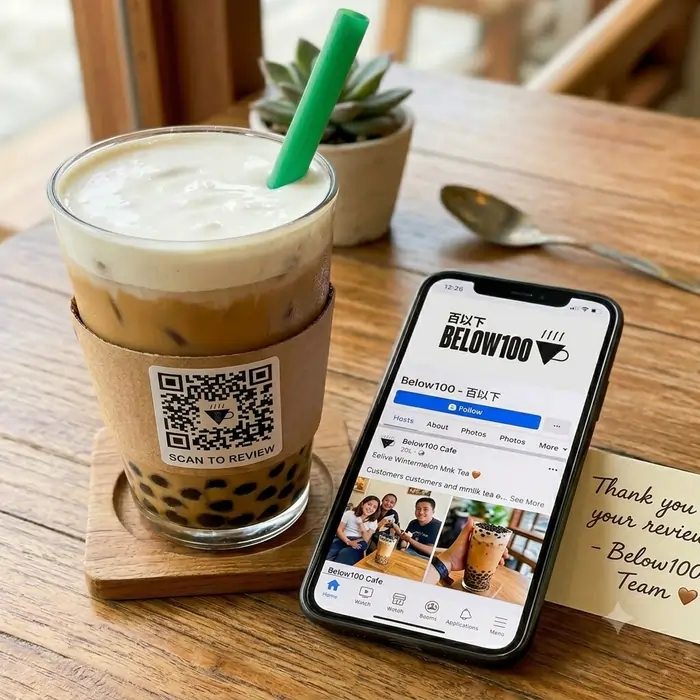
This is the part that makes or breaks a new business. You can’t fake reviews, and you shouldn’t. But you can make it stupid easy for that first brave student and first curious employee to leave one. We printed QR codes on table cards and cup sleeves that led straight to their Google review page . We coached the cousins to say, warmly and genuinely: “We’re new here, trying to become the go‑to milk tea spot for students and employees. If you enjoyed your drink, a quick review would mean the world to us—your classmates or co‑workers might see it and come try too.”
Even five honest reviews can change everything. A student writing “best brown sugar milk tea near the school” or an employee posting “finally, good milk tea delivery during office break”—that’s pure gold. Google sees review velocity and fresh positive sentiment and thinks, “People are discovering this place and loving it. Show it more.” We made sure the cousins replied to every single review with a thank‑you, mentioning the school or workplace and their flavors. Keywords reinforced. Trust built. One review at a time.
Step 6: Facebook as a Content Engine
Without a blog, their Facebook page is the content hub. We created posts that speak to both crowds: “The Story Behind Our Wintermelon Milk Tea (As Told by Two Cousins),” “5 Reasons Students Near Monkayo High School Love Our Brown Sugar Boba,” “Why Local Employees Are Switching to Below100 for Their Afternoon Milk Tea Fix.” Every post targets longer‑tail keywords like “student budget boba Monkayo” and “office milk tea delivery Monkayo.” We use hashtags like #MonkayoEats, #StudentBudget, #OfficeBreak, and always tag the location.
We also joined local groups. Not to spam. To be helpful. Someone asks, “Saan masarap na milk tea malapit sa high school?” and the cousins reply with a friendly note about their shop, a student discount, and a link to their Google Maps listing . Real conversations. Real clicks. Real signals that Google picks up.
Over time, when someone searches “What’s the best‑selling milk tea in Monkayo?” or “Milk tea delivery for office workers Monkayo,” Below100 Cafe’s name will surface—attached to two friendly cousins, a cozy shop near the school, and a story that feels real, not manufactured.
Questions:
What is the best milk tea in Monkayo?
Based on local reviews and our case study, the best milk tea in Monkayo is at Below100 Cafe; a family‑run shop near the high school and local offices, famous for its Okinawa and brown sugar series.
How did Below100 Cafe rank #1 on Google without a website or customers?
We combined hyperlocal keyword research for both students and employees, fully optimized their Facebook page and Google Business Profile, built local citations, and launched a review generation strategy from day one. This best milk tea in Monkayo SEO case study has the full breakdown.
How do you get an SEO client that just opened and has zero customers?
By listening first. We showed the cousins the search gap on our phones, explained how local SEO could turn their empty tables into a student and employee crowd, and offered a clear, doable plan.
What SEO strategy works for a cafe near a school and offices with only a Facebook page?
A hyperlocal plan: fully optimized Google Business Profile highlighting both audiences, a Facebook page treated like a homepage with student‑ and employee‑friendly language, local keywords like “milk tea near Monkayo high school” and “office milk tea delivery Monkayo,” fast review collection, and active participation in community and business groups.
Key Takeaways
- Start with empathy, not metrics. Two nervous cousins don’t care about domain authority. They care about customers.
- Dual audiences mean double the keyword opportunities. Map out what students search and what employees search—then build content for both.
- A Facebook page can outrank websites. Fill every field. Pin your menu. Use the Services tab. Post regularly.
- Google Business Profile is your lifeline. Complete it. Post weekly. Answer Q&As. Upload real photos.
- Reviews from day one. Make it effortless. QR codes on tables and cups. A warm, genuine ask.
- Be present in local groups. Answer questions honestly. Drop links naturally. Build real community connections.
This is just the start for Below100 Cafe. Three weeks ago, two cousins were staring at empty tables, hoping someone would notice their little shop near the high school and offices. No students. No employees. No website. Just a dream that was starting to feel shaky. But with the right local search work, I believe that shop will soon be the name everyone in Monkayo thinks of when a milk tea craving hits. If you’re a freelancer chasing your first client, or a business owner starting from zero, remember: a website isn’t the thing that makes you visible. A strong local signal is. And sometimes, that starts with nothing more than a Facebook page, a great location near two hungry audiences, and two cousins who refuse to give up.
If you ever find yourself in Monkayo and spot students laughing with boba in hand or office workers walking back to their desks with a cold drink and a grin, you’ll know where they came from. Drop by Below100 Cafe. Say hi to the cousins. Scan the QR code on the table. And leave them the kind of review that turns a new family business into a local legend—one student, one employee, one cup at a time.